
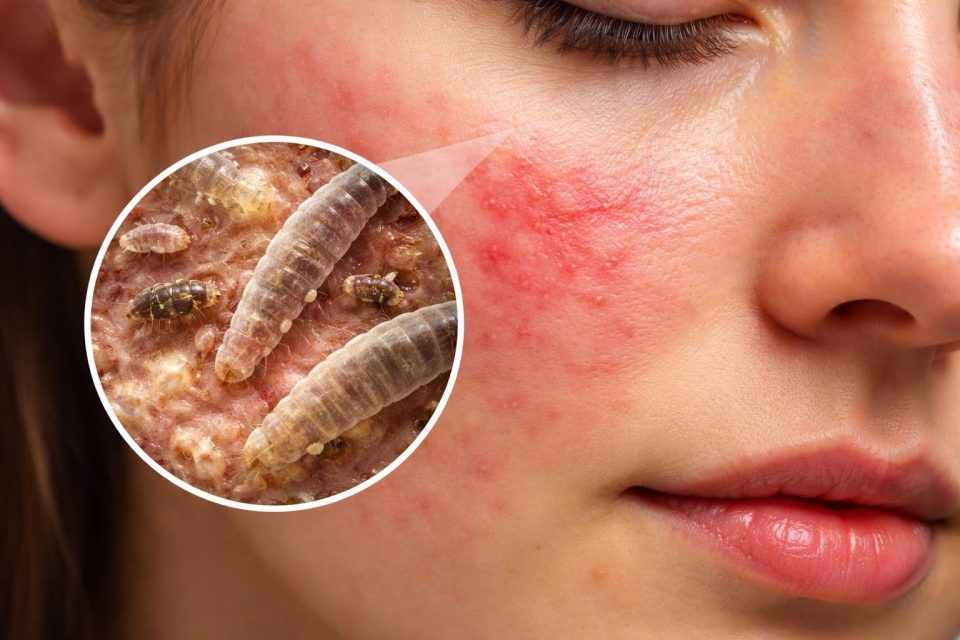
You've probably never given much thought to the microscopic creatures living on your face right now. Yes, right this very moment. Demodex mites are tiny eight-legged organisms that call your skin home, particularly loving the oily areas around your nose, cheeks, and forehead. For most people, these mites live quietly without causing problems. But for millions struggling with rosacea, these invisible inhabitants might be the key to understanding persistent facial redness, burning sensations, and inflammatory flare-ups that seem impossible to control.
Understanding Demodex Mites Living on Your Skin
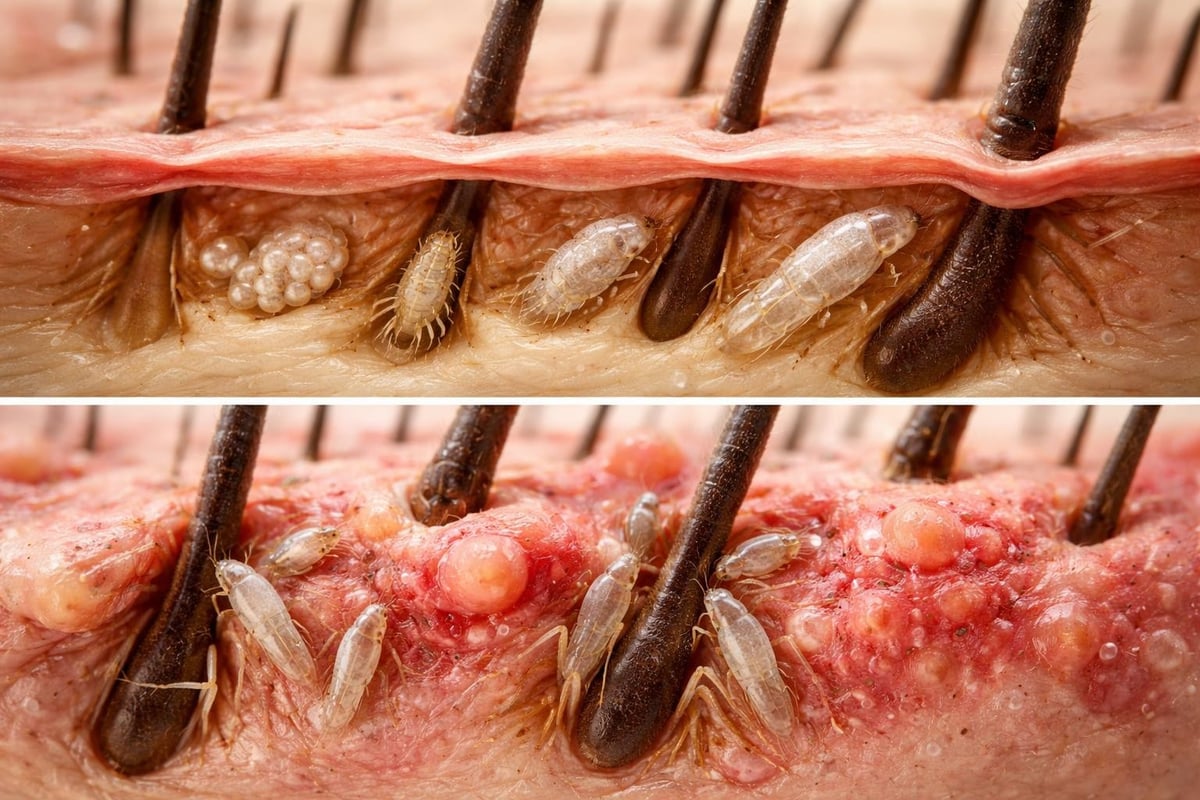
Demodex mites are microscopic arachnids that live in hair follicles and sebaceous glands across human skin. Two primary species colonize facial skin: Demodex folliculorum, which resides in hair follicles, and Demodex brevis, which prefers the deeper sebaceous glands.
These creatures measure just 0.1 to 0.4 millimeters in length, making them completely invisible to the naked eye. They survive by feeding on dead skin cells, oils, and hormones produced by your skin.
Here's what makes these mites particularly interesting:
- They're present on nearly everyone's skin by adulthood
- They become more numerous as we age
- They're most active at night, emerging to mate on the skin surface
- Their entire life cycle occurs on your skin, lasting about 14-18 days
Most people carry these mites without experiencing any symptoms. The problem arises when populations explode beyond normal levels or when your immune system begins reacting to their presence.
The Demodex Population Problem
Research suggests that people with rosacea have significantly higher densities of demodex mites compared to those without the condition. While a few mites per square centimeter is normal, studies examining facial skin biopsies have found dramatically elevated numbers in rosacea patients.
The threshold seems to matter. Once mite populations exceed a certain density, they may trigger the inflammatory cascade that characterizes rosacea symptoms.
| Skin Condition | Average Mite Density | Inflammatory Response |
|---|---|---|
| Healthy skin | 1-2 per sq cm | Minimal to none |
| Mild rosacea | 5-10 per sq cm | Moderate inflammation |
| Severe rosacea | 10+ per sq cm | Significant inflammation |
Why Demodex Mites Can Trigger Rosacea
Understanding demodex mites and why they can cause rosacea requires looking beyond simple numbers. The relationship involves complex biological interactions between the mites, bacteria they carry, and your skin's immune response.
When mite populations grow excessive, several inflammatory mechanisms activate simultaneously. These tiny creatures don't just occupy space. They actively participate in creating the conditions that lead to rosacea's characteristic symptoms.
The Bacterial Connection
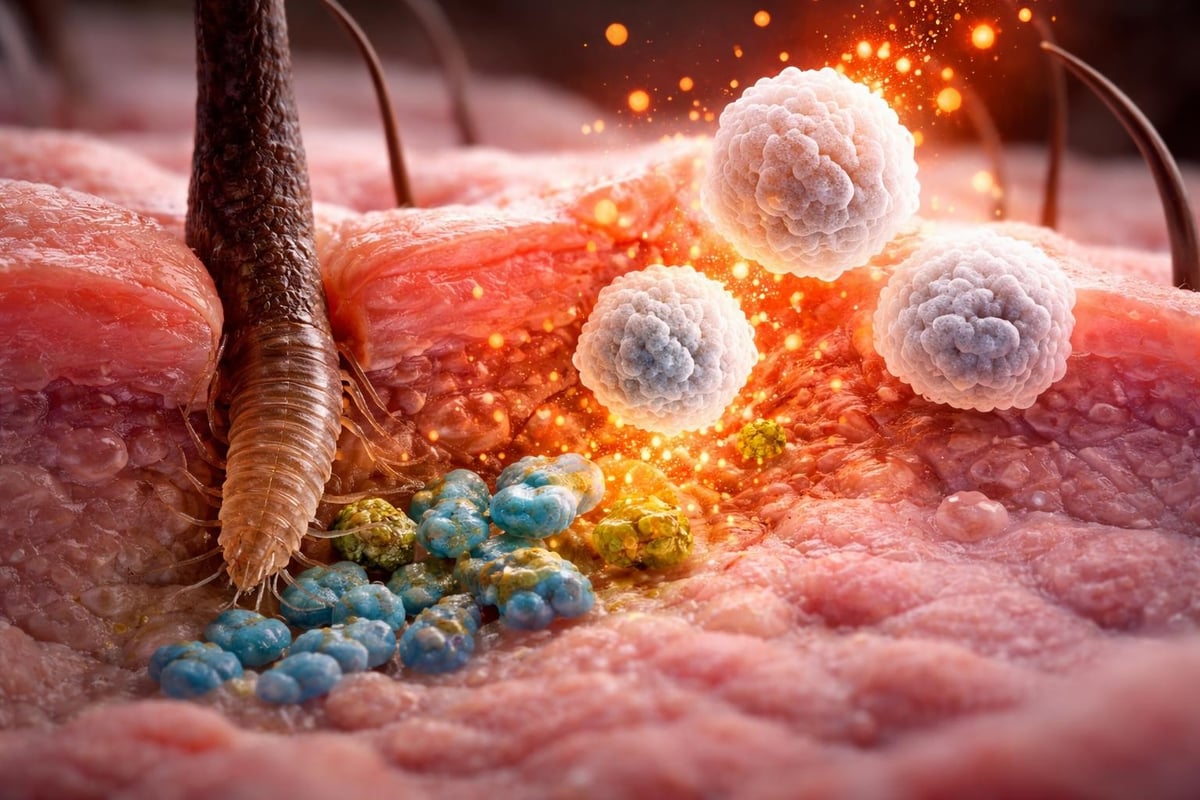
Demodex mites carry bacteria within their digestive systems, particularly Bacillus oleronius. When mites die and decompose on your skin, these bacteria release into surrounding tissues.
Your immune system recognizes these bacterial proteins as foreign invaders, triggering an inflammatory response. This process explains why the role of Demodex mites in rosacea has become a major focus for researchers and dermatologists alike.
The inflammation manifests as:
- Dilated blood vessels creating persistent redness
- Papules and pustules resembling acne
- Burning or stinging sensations
- Rough, thickened skin texture
- Increased sensitivity to skincare products
Immune System Overreaction
Your skin contains specialized immune cells constantly monitoring for threats. In rosacea patients, these cells may be hypersensitive to demodex mites and their byproducts.
The immune response involves multiple pathways:
- Toll-like receptors detecting mite proteins
- Cathelicidin peptides becoming abnormally active
- Inflammatory cytokines flooding affected areas
- Mast cells releasing histamine and other mediators
This overreaction creates a vicious cycle. Inflammation damages skin barrier function, creating more favorable conditions for mite proliferation, which triggers even more inflammation. Those seeking soothing cream for rosacea redness often find relief by addressing both inflammation and barrier repair simultaneously.
Physical Irritation and Barrier Disruption
Beyond chemical triggers, the physical presence of excessive mites causes mechanical irritation. As they burrow through follicles and glands, they stretch and damage delicate tissues.
Mites also consume the protective oils your skin produces. This disrupts your skin's natural barrier, allowing moisture loss and making skin more vulnerable to environmental irritants.
Different Demodex Species and Rosacea Severity
Not all demodex infestations affect rosacea the same way. Research indicates that different species of Demodex mites may influence rosacea severity differently.
Demodex folliculorum tends to associate more strongly with papulopustular rosacea, the subtype characterized by acne-like bumps. Demodex brevis, dwelling deeper in sebaceous glands, may correlate more with inflammatory changes and persistent redness.
Some patients harbor predominantly one species, while others host both. The ratio between species might influence which rosacea symptoms predominate in individual cases.
Evidence Linking Demodex Mites and Rosacea Development
The scientific community has compiled substantial evidence connecting these microscopic inhabitants to rosacea pathogenesis. A systematic review and meta-analysis demonstrated significantly increased demodex infestation prevalence among rosacea patients compared to healthy controls.
Additional research has revealed fascinating details about the relationship:
- Mite populations correlate with symptom severity
- Reducing mite numbers often improves clinical signs
- Demodex density increases in specific rosacea subtypes
- Mite distribution patterns match areas of facial redness
The Microbiome Dimension
Recent investigations have explored the microbiota of Demodex mites themselves, revealing differences between mites from rosacea patients and those from healthy individuals.
This suggests that it's not just mite quantity that matters. The quality and bacterial composition of mite populations may significantly influence whether they trigger inflammatory responses.
Your skin's microbiome represents a complex ecosystem where bacteria, fungi, mites, and viruses coexist. Disrupting this balance through harsh cleansers, over-exfoliation, or antibiotic overuse might inadvertently create conditions favoring demodex overgrowth.
Natural Approaches to Managing Demodex-Related Rosacea
Understanding demodex mites and why they can cause rosacea empowers you to take targeted action. While prescription medications like ivermectin and metronidazole directly target mites, natural approaches can support skin health and create less hospitable conditions for excessive mite populations.
Gentle Cleansing Strategies
Harsh cleansing strips away protective oils, paradoxically triggering increased oil production that feeds mites. Instead, focus on gentle, pH-balanced cleansing that maintains barrier integrity.
Effective cleansing principles include:
- Using lukewarm water instead of hot
- Choosing sulfate-free, fragrance-free cleansers
- Limiting cleansing to twice daily maximum
- Patting skin dry rather than rubbing
- Avoiding abrasive scrubs and tools
Tea tree oil has demonstrated antimicrobial properties that may help control mite populations when properly diluted. However, it requires careful use to avoid irritation in already sensitive rosacea skin.
Supporting Skin Barrier Function
A healthy barrier makes skin less permeable to irritants while creating less favorable conditions for mite overgrowth. Natural ingredients that support barrier repair include:
| Ingredient | Benefit | Application |
|---|---|---|
| Ceramides | Restore lipid barrier | Daily moisturizer |
| Niacinamide | Reduces inflammation | Morning and evening |
| Centella asiatica | Promotes healing | Treatment serums |
| Azelaic acid | Antimicrobial, anti-inflammatory | Targeted treatment |
Those exploring natural creams for wrinkles will find that many barrier-supporting ingredients also address aging concerns, making them multifunctional choices for mature skin dealing with rosacea.
Professional-grade skincare lines like Meta Skin Studio develop formulations specifically designed to address barrier dysfunction while managing inflammatory skin conditions through carefully selected, clean ingredients.
Lifestyle Modifications That Matter
Several lifestyle factors influence both mite populations and inflammatory responses. Managing these creates a less favorable environment for demodex overgrowth.
- Pillow hygiene: Change pillowcases every 2-3 days using hot water
- Makeup tools: Clean brushes and sponges weekly with antimicrobial cleansers
- Avoid sharing: Don't share towels, makeup, or skincare products
- Diet considerations: Some find reducing sugar and dairy helpful
- Stress management: Stress amplifies inflammatory responses

Why Some Skincare Products Worsen Demodex Problems
Certain skincare ingredients and product types can actually encourage mite proliferation or worsen inflammation. Heavy, occlusive oils and thick creams might trap mites against skin and create optimal breeding conditions.
Ingredients to approach cautiously with demodex-related rosacea:
- Heavy mineral oils and petrolatum in high concentrations
- Coconut oil and other highly comedogenic oils
- Synthetic fragrances triggering additional inflammation
- Harsh alcohols that damage barrier function
- Aggressive exfoliants causing micro-trauma
This doesn't mean avoiding all oils. Some plant oils possess antimicrobial properties that may help control mite populations when used appropriately. The key lies in choosing lightweight, non-comedogenic options and applying them sparingly.
When to Seek Professional Help
While natural approaches support skin health, severe demodex-related rosacea often requires professional intervention. Dermatologists can prescribe targeted treatments that directly reduce mite populations.
Consider professional consultation if you experience:
- Persistent redness lasting weeks or months
- Inflammatory papules and pustules
- Eye involvement (ocular rosacea)
- Progressive symptom worsening
- Significant impact on quality of life
Dermatologists can perform skin scrapings to confirm elevated mite densities and rule out other conditions mimicking rosacea. This diagnostic clarity ensures appropriate treatment selection.
The Future of Demodex-Targeted Rosacea Treatments
Research continues exploring the pathogenic role of Demodex mites, suggesting they may serve as therapeutic targets even in early rosacea stages.
Emerging treatments focus on:
- Novel antimicrobial peptides specifically targeting mites
- Probiotics that rebalance skin microbiome
- Barrier-repair formulations that indirectly discourage mites
- Combination approaches addressing multiple inflammatory pathways
Understanding the complex relationship between demodex mites and rosacea has transformed how we approach this challenging condition. Rather than viewing rosacea as purely vascular or inflammatory, we now recognize it as a multifactorial disorder where microscopic skin inhabitants play crucial roles.
The relationship between Demodex mites and rosacea within the skin's microbiome continues revealing new insights that inform treatment strategies. Managing demodex populations represents just one piece of the puzzle, but it's an increasingly important piece that natural and conventional treatments alike are beginning to address more effectively.
For those dealing with combination skin issues alongside rosacea, understanding skin care for combination skin helps balance different facial zones' needs while managing inflammatory conditions.
As research progresses, we're learning that successful rosacea management requires addressing multiple factors simultaneously: controlling mite populations, supporting barrier function, modulating immune responses, and maintaining microbiome balance. This comprehensive approach offers the best hope for long-term symptom control and improved quality of life for the millions affected by this visible, often distressing condition.
Understanding demodex mites and why they can cause rosacea opens new pathways for managing this challenging skin condition through targeted, informed approaches. Whether you're dealing with persistent facial redness or seeking preventive strategies, addressing mite populations while supporting your skin's natural barrier creates the foundation for clearer, calmer skin. At Sinusoothe Ltd, we specialize in natural skincare products formulated to soothe sensitive, reactive skin while supporting the delicate balance your complexion needs to thrive. Discover gentle, effective solutions designed with your skin's unique needs in mind.