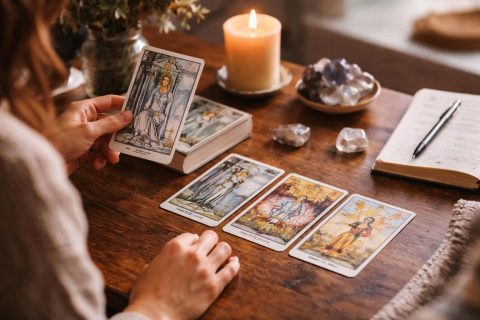
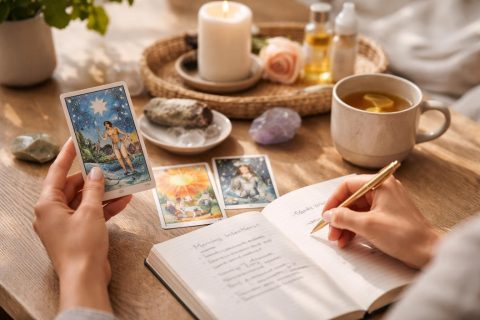
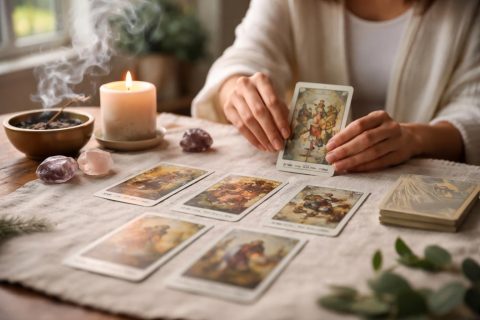
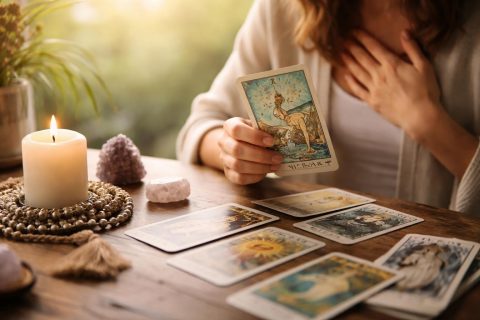
Have you ever felt stuck in a rut, wondering what your next step should be? We all face moments when external advice falls short and we need to look within. That's where tarot for self-reflection becomes a powerful companion on your wellness journey. Far beyond fortune-telling stereotypes, tarot offers a structured way to explore your thoughts, emotions, and patterns. Just as natural skincare requires understanding your unique skin needs, self-reflection through tarot helps you understand your inner landscape. This practice creates space for honest conversations with yourself, revealing insights that might otherwise remain hidden beneath daily distractions.
Understanding Tarot as a Mirror for Your Inner World
Tarot for self-reflection works differently than you might expect. Instead of predicting your future, the cards act as a mirror reflecting your current mental and emotional state back to you.
Think of each card as a conversation starter with yourself. When you draw The Tower, it doesn't mean disaster is coming. Rather, it invites you to examine where change might be necessary or where you're resisting transformation. The psychological aspects of tarot help you confront parts of yourself you might otherwise avoid.
The Shift from Fortune-Telling to Personal Discovery
The modern approach to tarot emphasizes introspection over prediction. Tarot has evolved from a fortune-telling tool to a resource for personal growth and meaningful self-examination.
Key benefits of using tarot reflectively:
- Clarifies complex emotions you can't quite name
- Reveals patterns in your behavior and choices
- Provides fresh perspectives on challenging situations
- Strengthens your connection to intuition
- Creates dedicated time for self-care and contemplation
This mirrors the approach many take with skincare. Just as choosing natural creams for wrinkles requires understanding your skin's unique needs, tarot helps you understand what your inner self truly requires.

Getting Started with Your Tarot Self-Reflection Practice
Beginning a tarot for self-reflection practice doesn't require years of study or psychic abilities. It simply asks for openness and honesty with yourself.
Choosing Your First Deck
Your tarot deck should resonate with you visually and emotionally. The Rider-Waite-Smith deck remains popular for beginners because its imagery is rich with symbolism that speaks intuitively.
Browse different decks and notice which artwork draws you in. Do you prefer traditional Renaissance imagery or modern minimalist designs? Your connection to the cards matters more than following trends.
Creating a Reflective Space
| Element | Purpose | Examples |
|---|---|---|
| Physical Space | Minimizes distractions | Quiet corner, comfortable cushion, clean surface |
| Atmosphere | Enhances focus | Soft lighting, calming scent, silence or gentle music |
| Tools | Supports practice | Journal, pen, reference book, cleansing items |
| Time | Ensures consistency | Same daily time, 10-30 minutes, uninterrupted |
Just as you might establish a skincare routine with products like soothing cream for rosacea, your tarot practice benefits from consistency and dedicated attention.
Crafting Questions That Unlock Insights
The questions you ask determine the quality of insights you receive. Tarot for self-reflection thrives on open-ended, introspective questions rather than yes/no queries.
Instead of asking: "Will I get the promotion?"
Try asking: "What qualities should I develop to advance in my career?"
Powerful Question Frameworks
- Present awareness: "What do I need to understand about my current situation?"
- Hidden influences: "What am I not seeing clearly right now?"
- Personal growth: "Where should I focus my energy for development?"
- Obstacle identification: "What's holding me back from my goals?"
- Action steps: "How can I best approach this challenge?"
Using specific questions for tarot helps you uncover hidden truths about your motivations and desires. These frameworks shift your perspective from passive recipient to active participant in your growth.
Simple Spreads for Daily Self-Reflection
You don't need complex spreads to gain meaningful insights. Simple layouts often yield the deepest understanding.
The Single Card Pull
Draw one card each morning and ask: "What energy should I embody today?" or "What lesson is available to me today?"
Sit with the card for a few minutes. Notice your immediate reaction. Does it bring comfort or resistance? Both responses offer valuable information.
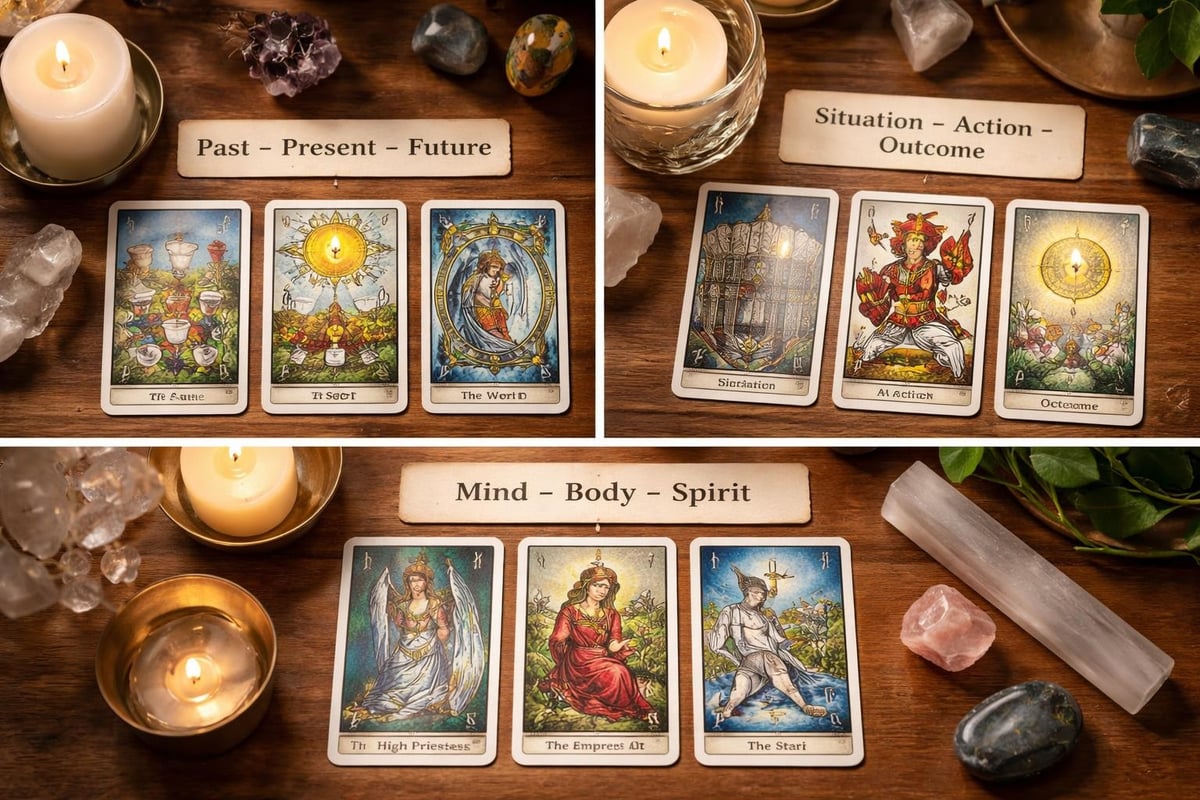
The Three-Card Journey
This versatile spread works for countless situations:
- Past, Present, Future: How you arrived here, where you stand, where you're heading
- Situation, Action, Outcome: Current circumstances, what you can do, potential result
- Mind, Body, Spirit: Your mental state, physical needs, spiritual guidance
- Challenge, Approach, Lesson: What's difficult, how to handle it, what you'll learn
The Weekly Reflection Spread
Sunday evening practice (7 cards):
- Overall theme for the week
- Monday's energy
- Midweek challenge
- Wednesday's support
- Weekend opportunity
- Lesson to integrate
- Advice moving forward
This spread helps you navigate your week with intention, similar to how you might plan your wellness routine, including when to use natural anti-fatigue eye cream for optimal results.
Interpreting Cards Through Personal Lens
Tarot for self-reflection becomes most powerful when you personalize interpretations rather than memorizing textbook meanings.
Building Your Intuitive Muscle
When a card appears, notice what draws your attention first. A color? A symbol? A character's expression? Your subconscious often highlights what's most relevant to your situation.
Journaling prompts for deeper understanding:
- What emotion does this card evoke in me?
- If this card were a person I know, who would it be?
- What in my life right now mirrors this card's energy?
- What does this symbol mean in my personal experience?
- If this card could speak, what would it tell me?
Recognizing Patterns Across Readings
Keep a tarot journal to track recurring cards and themes. If The Hermit appears three times in a week, your inner wisdom is shouting that you need solitude and introspection.
| Recurring Card | Possible Message | Reflection Question |
|---|---|---|
| Major Arcana repeating | Significant life lesson unfolding | What major shift am I experiencing? |
| Same suit appearing | Imbalance in that life area | Where am I over- or under-investing energy? |
| Court cards frequently | Personality aspect to develop | What qualities do I need to embody or release? |
| Reversed cards clustering | Internal blockages present | What am I resisting or avoiding? |
Understanding tarot’s purpose as self-reflection emphasizes how these patterns reveal your psychological landscape over time.
Strengthening Inner Authority Through Tarot
One concern about tarot is becoming dependent on cards for every decision. Healthy tarot for self-reflection actually strengthens your inner authority rather than replacing it.
Maintaining Balanced Practice
Using tarot reflectively without dependency means consulting the cards to illuminate options, not to make choices for you. The cards suggest perspectives; you make decisions.
Signs of healthy practice:
- You consult cards for clarity, not permission
- You trust your interpretation over guidebook definitions
- You can skip days without anxiety
- You use insights as starting points for action
- You take full responsibility for your choices
Warning signs of dependency:
- Pulling cards compulsively for reassurance
- Unable to decide anything without consulting cards
- Ignoring intuition when cards don't match it
- Treating cards as ultimate authority
- Using readings to avoid taking action
Integrating Insights Into Real Life
Reading cards without taking action creates stagnation. After each session, identify one concrete step you can take based on your insights.
Drew The Empress suggesting you need more self-care? Schedule time for a nourishing routine. Perhaps explore natural skin care for combination skin or other wellness practices that honor your body's needs.
Seasonal and Intentional Readings
Aligning your tarot for self-reflection practice with natural cycles deepens its impact.
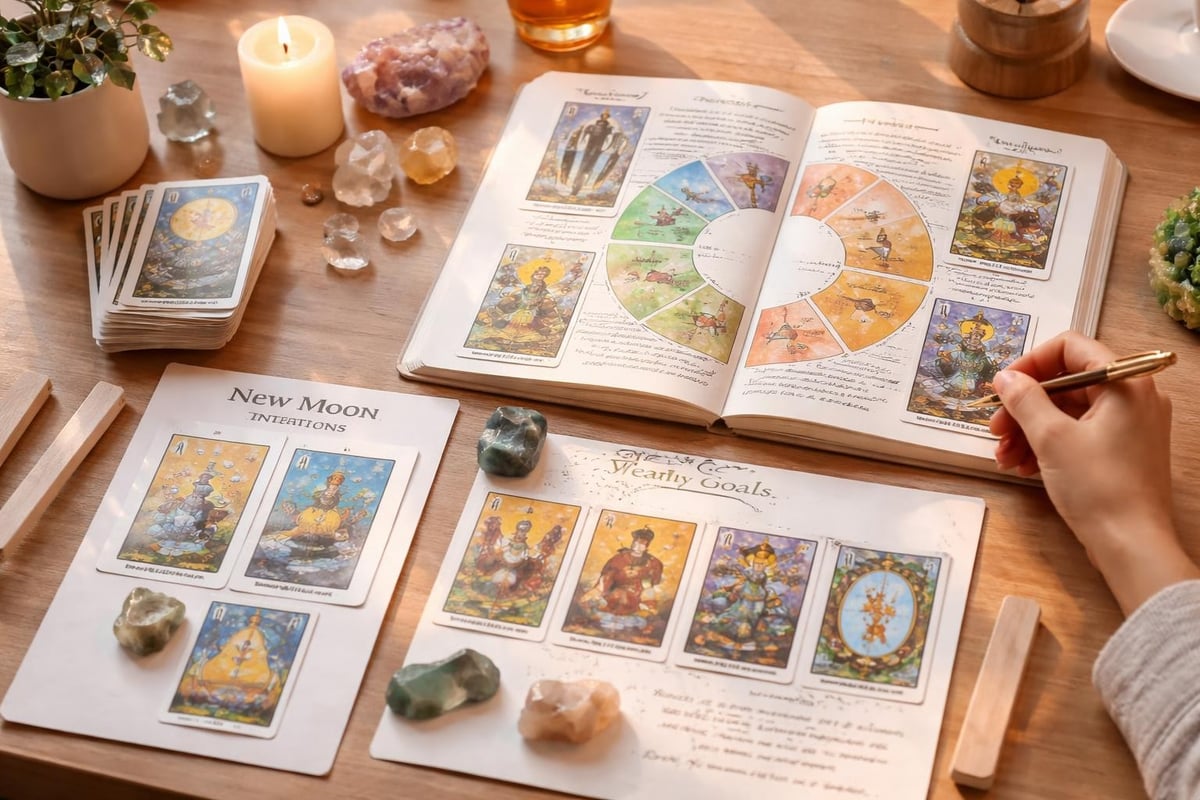
New Moon Intentions Spread
- What am I releasing from the previous cycle?
- What new energy is entering my life?
- How can I best support this new beginning?
- What might challenge this intention?
- Guidance for the lunar month ahead
Quarterly Life Review
Every three months, examine:
- Personal growth achievements
- Relationships requiring attention
- Career or creative development
- Physical and emotional wellness
- Spiritual connection status
- Financial consciousness
- Areas needing course correction
This comprehensive check-in resembles evaluating whether your wellness approach needs adjustment, similar to assessing whether you need creams for menopausal dry skin as your body's needs change.
Addressing Common Concerns and Misconceptions
Many people hesitate to explore tarot for self-reflection due to misconceptions or concerns. Let's address the most common ones directly.
"Isn't Tarot Just Fortune-Telling?"
Modern tarot usage focuses on self-reflection and personal insight rather than predicting fixed futures. The cards reveal current energies and potential outcomes based on your present path, not unchangeable destiny.
"What If I Get Scary Cards?"
No card is inherently negative. The Death card typically signals transformation and necessary endings, not physical death. The Devil often points to unhealthy attachments or limiting beliefs you can choose to release.
Reframing "difficult" cards:
- The Tower: Breakthrough, liberation from false structures
- Ten of Swords: Rock bottom with nowhere to go but up
- Five of Pentacles: Recognition of what you need to ask for help
- Three of Swords: Honest acknowledgment of heartbreak that begins healing
"Do I Need Special Abilities?"
Absolutely not. Tarot for self-reflection uses your existing intuition, which everyone possesses. You already interpret symbols daily (traffic lights, emojis, body language). Tarot simply provides a structured symbolic language.
Combining Tarot with Other Wellness Practices
Tarot integrates beautifully with holistic self-care routines, creating a comprehensive approach to well-being.
Meditation and Tarot
Before pulling cards, spend five minutes in meditation to quiet mental chatter. This creates space for intuition to speak more clearly.
After your reading, meditate on the card imagery. Let symbols and meanings percolate through your consciousness without forcing understanding.
Journaling Your Journey
Write freely about your readings without censoring. Include:
- Cards drawn and initial reactions
- Personal interpretations and insights
- Emotions that arose during the reading
- Connections to current life situations
- Actions you plan to take
- Follow-up on how guidance played out
Over time, your journal becomes a record of growth, showing patterns you couldn't see day-to-day.
Physical Wellness Connection
Your mental and emotional state directly impacts physical health. Just as you might address how to get rid of cellulite through natural approaches, tarot helps address emotional patterns that manifest physically.
Integration ideas:
- Draw a card before your skincare routine, setting intentions as you apply products
- Use suit of Pentacles readings to explore body relationship and physical needs
- Pull cards when making wellness decisions about nutrition, exercise, or rest
- Reflect on stress patterns revealed in readings and their physical manifestations
Building a Sustainable Practice
Consistency matters more than complexity. A simple daily practice yields more insights than elaborate occasional readings.
Creating Your Ritual
Morning practice (5-10 minutes):
- Light a candle or open curtains to mark the beginning
- Shuffle while breathing deeply
- Draw your daily card
- Journal one immediate thought
- Carry that awareness through your day
Evening reflection (10-15 minutes):
- Review how the morning card manifested
- Pull cards for any specific questions
- Record insights and feelings
- Identify tomorrow's intention
When to Take Breaks
Sometimes stepping away from tarot for self-reflection serves you better than continuing. If readings feel forced, repetitive, or anxiety-inducing, pause.
Trust that taking breaks doesn't erase progress. Like letting skin rest between treatments, giving your practice breathing room often leads to renewed clarity.
The Community Aspect of Personal Tarot
While tarot for self-reflection is inherently personal, connecting with others enriches your practice.
Finding Your Approach
Ongoing discussions within tarot communities explore whether tarot should focus on self-reflection versus reading for others. There's no single correct answer. Your practice should align with your values and goals.
Some practitioners only read for themselves, preserving tarot as a private dialogue. Others find that reading for friends deepens their interpretive skills. Both approaches are valid.
Learning Resources
- Online courses focusing on psychological tarot approaches
- Books by Mary K. Greer, Rachel Pollack, and Benebell Wen
- Instagram accounts sharing daily card reflections
- Local meetup groups for practice and discussion
- Podcasts exploring tarot philosophy and technique
Sharing Without Oversharing
You might want to discuss insights with trusted friends or partners. Set boundaries about what remains private and what you're comfortable sharing.
Your tarot journal is for your eyes alone unless you choose otherwise. Protect the vulnerable exploration that happens in these reflective spaces.
Tarot for self-reflection offers a gentle yet profound pathway to understanding yourself more deeply, revealing patterns and possibilities that inform wiser choices throughout your wellness journey. Just as caring for your skin requires personalized attention to what your body truly needs, developing inner awareness through tarot helps you honor your authentic self. At Sinusoothe Ltd, we believe holistic wellness encompasses both inner reflection and outer care, which is why our natural skincare products support you in nurturing yourself completely, inside and out.