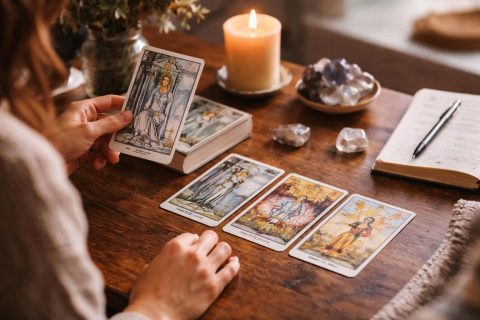
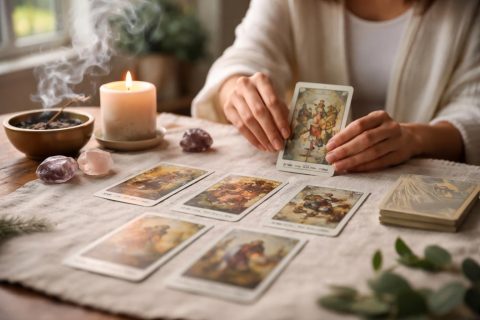
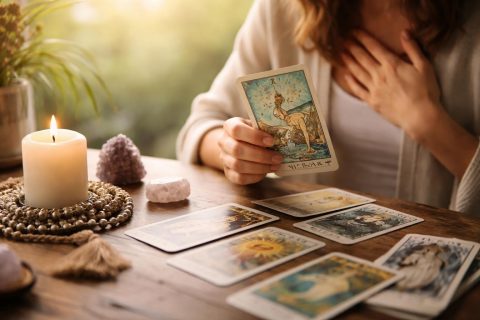
Life moves fast in 2026, and finding moments for genuine self-reflection can feel like searching for water in a desert. Between constant notifications, work demands, and the pressure to maintain perfect wellness routines, many of us crave something that actually helps us pause and check in with ourselves. Enter the surprisingly practical world of tarot as a self-care tool. Before you dismiss this as mystical nonsense, consider that your tarot self-care plan isn't about predicting the future or communicating with spirits. It's about creating a structured space for introspection, pattern recognition, and honest conversation with yourself.
Understanding Tarot as a Self-Care Practice
Think of tarot cards as psychological mirrors rather than fortune-telling devices. The images, archetypes, and symbols on each card serve as conversation starters with your subconscious mind.
When you pull the Tower card, for example, you're not receiving a cosmic warning about impending disaster. Instead, you're being prompted to consider where in your life you might be experiencing upheaval or where old structures need to crumble to make room for growth.
This reframing transforms tarot from mystical to practical. Research on the psychological effects of tarot suggests that when used mindfully, it can support mental wellness rather than harm it. The key lies in approaching the practice with healthy boundaries and clear intentions.
The Science Behind Symbolic Self-Reflection
Your brain loves stories and patterns. Tarot provides both in abundance.
When you engage with symbolic imagery, you activate different neural pathways than when you simply think about your problems directly. This lateral thinking approach often reveals insights that linear problem-solving misses entirely.
- Visual processing engages creative brain regions
- Pattern recognition helps identify recurring life themes
- Narrative creation organizes experiences into meaningful stories
- Symbolic interpretation accesses subconscious knowledge
Just as journaling helps process emotions through words, tarot can be utilized as a tool for self-reflection through images and archetypes.
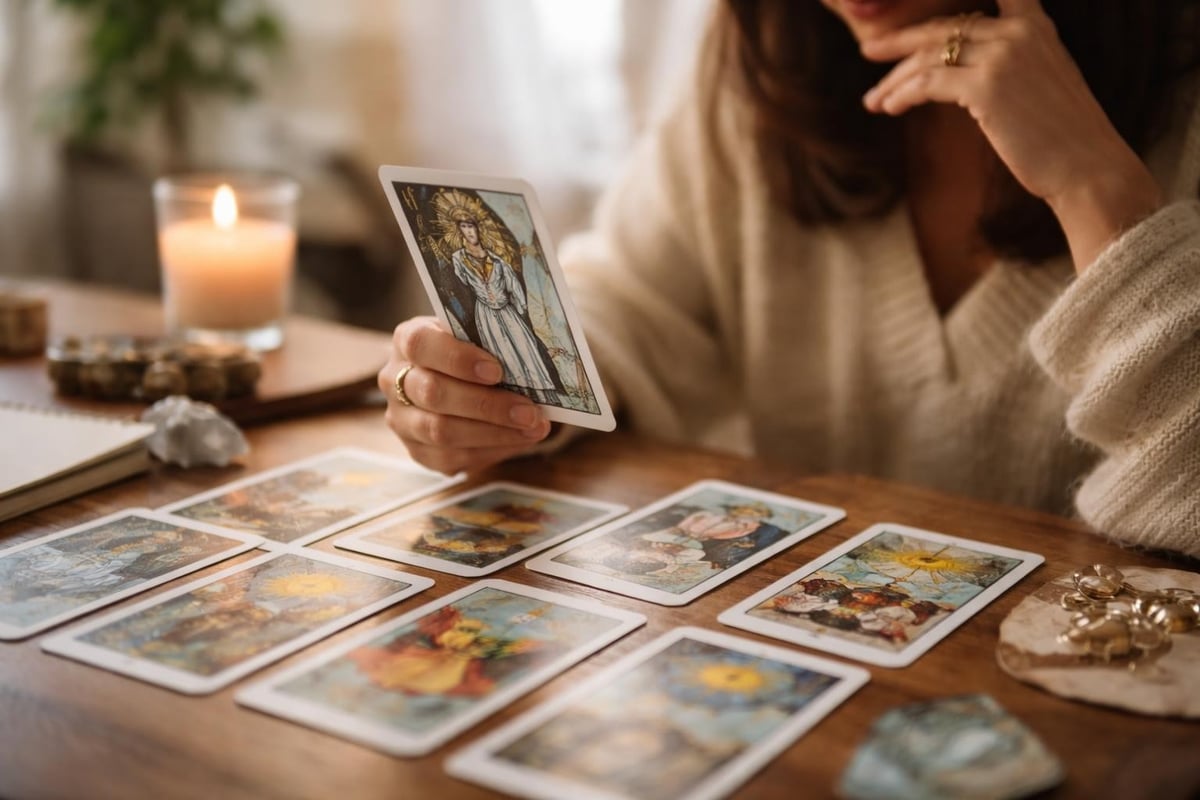
Building Your Tarot Self-Care Plan Foundation
Creating your tarot self-care plan starts with establishing intention and consistency, much like developing any wellness routine.
First, select a deck that resonates with you visually. The Rider-Waite-Smith deck remains popular because its imagery is rich and accessible, but thousands of beautiful alternatives exist. Choose artwork that speaks to your aesthetic sensibility, whether that's minimalist line drawings, lush botanical illustrations, or contemporary photography.
Essential Components for Success
Your practice needs structure to become sustainable. Here's what actually works:
- Dedicate a specific time (morning coffee, lunch break, before bed)
- Create a comfortable space free from distractions
- Keep a tarot journal to track patterns over time
- Start with simple spreads before advancing to complex layouts
- Set clear intentions before each session
The beauty of incorporating tarot into self-care is that it pairs naturally with other wellness practices. Just as you might use natural creams for wrinkles as part of your skincare routine, tarot becomes one element in your broader self-maintenance toolkit.
| Time Investment | Practice Level | Recommended Frequency |
|---|---|---|
| 5-10 minutes | Beginner (1 card) | Daily |
| 15-20 minutes | Intermediate (3 cards) | 3-4 times weekly |
| 30-45 minutes | Advanced (complex spreads) | Weekly |
| 60+ minutes | Deep work sessions | Monthly |
Practical Spreads for Daily Self-Care
Your tarot self-care plan becomes most effective when you match spreads to specific needs rather than randomly pulling cards.
The single-card pull remains the foundation of daily practice. Each morning, draw one card asking: "What do I need to know today?" This simple ritual takes less time than scrolling social media but offers significantly more value.
The Self-Care Check-In Spread
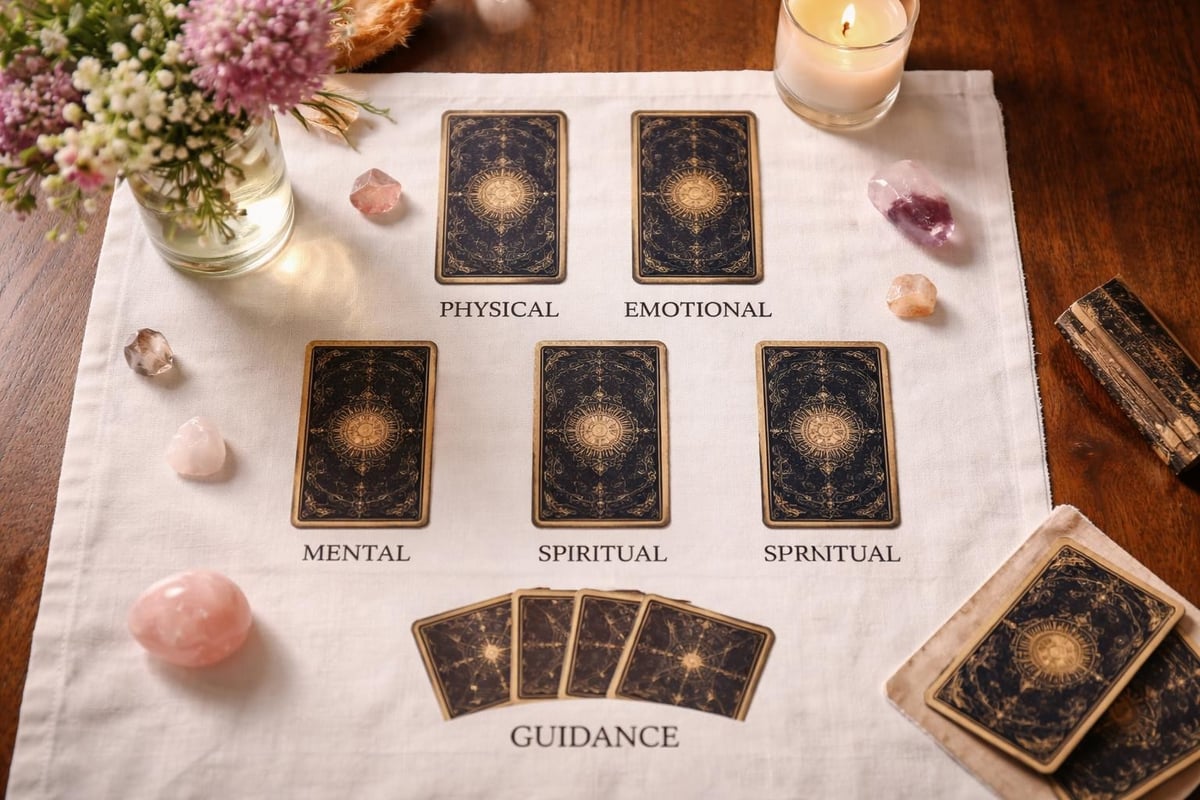
For deeper work, try self-care spreads designed to check in with different aspects of your wellbeing:
Position 1: Physical Body – What does my body need right now?
Position 2: Emotional State – How am I really feeling?
Position 3: Mental Clarity – What thoughts require attention?
Position 4: Spiritual Connection – What feeds my soul?
Position 5: Action Step – What's one thing I can do today?
This spread takes approximately 15 minutes and provides comprehensive insight across multiple wellness dimensions. Unlike vague self-assessment questionnaires, the cards' imagery often reveals truths you've been avoiding.
Weekly Reflection Practice
Set aside 20 minutes each Sunday or Monday for a more extensive check-in. A seven-card self-care spread offers compassionate guidance across the week ahead.
The structure creates accountability. When the cards consistently show exhaustion or depletion, you can't ignore the pattern. This recognition alone often catalyzes necessary changes.
Integrating Tarot with Holistic Wellness
The most powerful aspect of your tarot self-care plan emerges when you connect card insights to tangible wellness actions.
Pulled the Four of Swords suggesting rest? Actually schedule downtime rather than just acknowledging you need it. Drew the Ace of Cups indicating emotional renewal? Plan activities that genuinely fill your cup, whether that's time in nature, creative expression, or connection with loved ones.
Connecting Inner and Outer Care
Self-care encompasses both internal reflection and external maintenance. Your tarot practice can inform how you care for your physical body.
If cards repeatedly point toward depletion or stress, consider whether your current routines truly support you. Are you using products that nourish your skin naturally, or just whatever's convenient? The same intentionality you bring to card interpretation can extend to choosing natural skincare products that align with your values.
Cross-reference card messages with lifestyle choices:
- Stress-indicating cards → Review sleep, nutrition, skincare routines
- Creativity cards → Schedule time for expressive activities
- Boundary cards → Assess where you're overextending
- Joy cards → Identify what actually brings happiness
Developing Card Literacy for Deeper Insight
Understanding basic tarot structure enhances your tarot self-care plan exponentially. You don't need to memorize every traditional meaning, but grasping core concepts helps.
The 78-card deck divides into Major Arcana (22 cards depicting life's big themes) and Minor Arcana (56 cards covering daily experiences). The Minor Arcana further breaks into four suits, each representing different life aspects.
The Four Suits as Self-Care Categories
| Suit | Element | Self-Care Domain | Focus Questions |
|---|---|---|---|
| Cups | Water | Emotional wellness | How do I feel? What nourishes my heart? |
| Pentacles | Earth | Physical health | What does my body need? How's my environment? |
| Swords | Air | Mental clarity | What thoughts dominate? How's my mindset? |
| Wands | Fire | Passion & energy | What excites me? Where's my motivation? |
Using tarot for self-care becomes more nuanced when you understand these elemental associations. A spread heavy in Swords suggests mental overwhelm requiring different interventions than a Cups-dominant reading indicating emotional processing needs.
Reading Beyond Traditional Meanings
The most valuable skill in your tarot self-care plan is learning to read cards intuitively rather than relying exclusively on guidebook interpretations.
What catches your eye first in the card's imagery? What emotions arise when you see it? How does the card's energy feel in this moment?
Trust your gut reactions. If the traditional meaning of the Three of Swords (heartbreak, sorrow) doesn't resonate but you notice the storm clouds clearing in the background, explore what emotional weather patterns might be shifting for you.
Common Pitfalls and How to Avoid Them
Even well-intentioned tarot practices can become problematic without proper boundaries.
Card Addiction and Obsessive Reading
The biggest red flag? Pulling cards repeatedly until you get the answer you want. This behavior indicates you're using tarot to avoid decision-making rather than support it.
Set clear limits: one reading per question, maximum one reading per day on major issues. If you find yourself obsessively shuffling at 2 AM seeking reassurance, step back and examine what's driving the anxiety.
Maintaining Healthy Perspective
Remember that cards don't determine your future. They reflect current energies and possible trajectories based on present patterns.
Research on tarot and mental wellness emphasizes its value as a reflective tool rather than a decision-making authority. Your tarot self-care plan should empower your agency, not replace it.
- Do: Use cards to explore options and feelings
- Don't: Let cards override your judgment or professional advice
- Do: Track patterns over time in your journal
- Don't: Make major life decisions based solely on one reading

Advanced Practices for Seasoned Readers
Once you've established a consistent foundation with your tarot self-care plan, several advanced techniques can deepen your practice.
Shadow Work with Tarot
The cards excel at illuminating aspects of ourselves we typically avoid. Deliberately pull cards asking about your shadow qualities: What am I refusing to acknowledge? Where am I deceiving myself? What behavior pattern keeps repeating?
This work requires emotional readiness and often benefits from professional support alongside tarot practice. The cards raise questions; therapy helps process the answers.
Creating Personal Card Meanings
After working with your deck for several months, you'll notice certain cards consistently appear during specific situations. Document these personal associations.
Maybe the Nine of Pentacles always shows up when you need to prioritize solo time and self-sufficiency. Perhaps the Page of Cups signals incoming creative inspiration that requires nurturing. These personalized meanings become more relevant than generic interpretations.
Develop your unique card vocabulary through:
- Journaling every reading with date and context
- Noting life events that followed specific cards
- Photographing cards that seem particularly significant
- Reviewing patterns quarterly to identify connections
Essential Self-Care Habits for Tarot Practitioners
Ironically, people who use tarot for self-care sometimes neglect basic wellness while focusing on spiritual practices. Five essential habits keep your practice sustainable.
Energy Management
Pay attention to how readings affect your energy. Some sessions leave you feeling enlightened and energized; others drain you emotionally. Notice the difference.
If deep shadow work leaves you depleted, follow it with grounding activities: walk outside, prepare nourishing food, engage in gentle movement. Balance introspection with embodiment.
Protecting Your Practice Space
Whether you read at your kitchen table or have a dedicated altar, maintain the energetic quality of your space. This doesn't require elaborate rituals, just intentionality.
Clear the space before readings (open a window, light a candle, play calming music). Store your deck somewhere it won't absorb ambient stress. Treat your cards as sacred tools deserving respect.
Seasonal Self-Care with Tarot
Your tarot self-care plan can shift with the seasons, honoring natural cycles rather than maintaining rigid consistency year-round.
Spring (March-May): Focus on growth, new beginnings, and fresh perspectives. Pull cards asking what wants to emerge and what winter habits to release.
Summer (June-August): Emphasize joy, abundance, and creative expression. Use cards to identify what brings genuine pleasure versus obligatory activities.
Autumn (September-November): Explore gratitude, harvest, and preparation. Ask cards what you've cultivated this year and what requires completion before winter.
Winter (December-February): Prioritize rest, reflection, and inner work. Pull cards examining what needs composting and what seeds to plant internally for spring growth.
This seasonal approach, much like natural skincare routines that adapt to weather changes, acknowledges that your needs fluctuate throughout the year.
Journaling Practices That Enhance Card Work
The real magic of your tarot self-care plan happens in the journal pages after you put the cards away.
Record more than just card names and positions. Capture your emotional response, physical sensations during the reading, immediate insights, and questions raised. Return to entries weeks or months later to see how situations evolved.
Effective tarot journaling includes:
- Date, time, and current mood before reading
- Question asked or intention set
- Cards pulled with brief notes on imagery that stands out
- Immediate interpretation and gut reactions
- Actions you'll take based on insights
- Follow-up notes about how guidance played out
This documentation transforms isolated readings into a comprehensive self-awareness practice revealing long-term patterns invisible in individual sessions.
Making Your Practice Sustainable
The difference between a tarot phase and your tarot self-care plan lies in sustainability. Brief enthusiasm fades; integrated practices endure.
Start small. One card daily beats elaborate weekly spreads you'll abandon by February. Build consistency before complexity.
Connect to existing routines. Pull your morning card while coffee brews. Do weekly spreads during your regular self-care time. Anchor new habits to established ones.
Release perfectionism. Missed three days? Just resume today. Forgot what a card traditionally means? Trust your intuition. The practice serves you, not the other way around.
Knowing When to Step Back
Sometimes the most self-caring action is putting the cards away. If readings increase anxiety rather than provide clarity, take a break. If you're using tarot to avoid taking action on obvious problems, you need different tools.
Your tarot self-care plan should ultimately support your wellbeing, not become another source of stress or obligation. Check in regularly: Is this practice still serving me? What needs adjusting?
Community and Solo Practice Balance
While tarot excels as a personal reflective tool, connecting with other practitioners can deepen your understanding and prevent echo chamber thinking.
Join online communities where people share interpretations and spreads. Attend local meetups or workshops. Read diverse perspectives on card meanings and practices.
Balance community learning with solo interpretation. Other people's insights can expand your understanding, but your personal relationship with the cards matters most. Don't let external voices override your intuition.
Consider occasional professional readings too. Experienced readers often see patterns and connections you miss in your own situations. Their perspective can validate your practice or introduce techniques worth incorporating into your tarot self-care plan.
Building a sustainable tarot self-care practice offers a structured path toward greater self-awareness, emotional processing, and intentional living in our chaotic modern world. The cards provide prompts for conversations you might otherwise avoid, revealing patterns and possibilities that logical thinking alone often misses. Just as you care for your outer self with thoughtful choices about what touches your skin, tarot helps you tend to your inner landscape with equal intentionality. If you're ready to support your complete wellness journey with products as mindful as your reflective practices, explore Sinusoothe Ltd for natural skincare that honors both your body and values.