
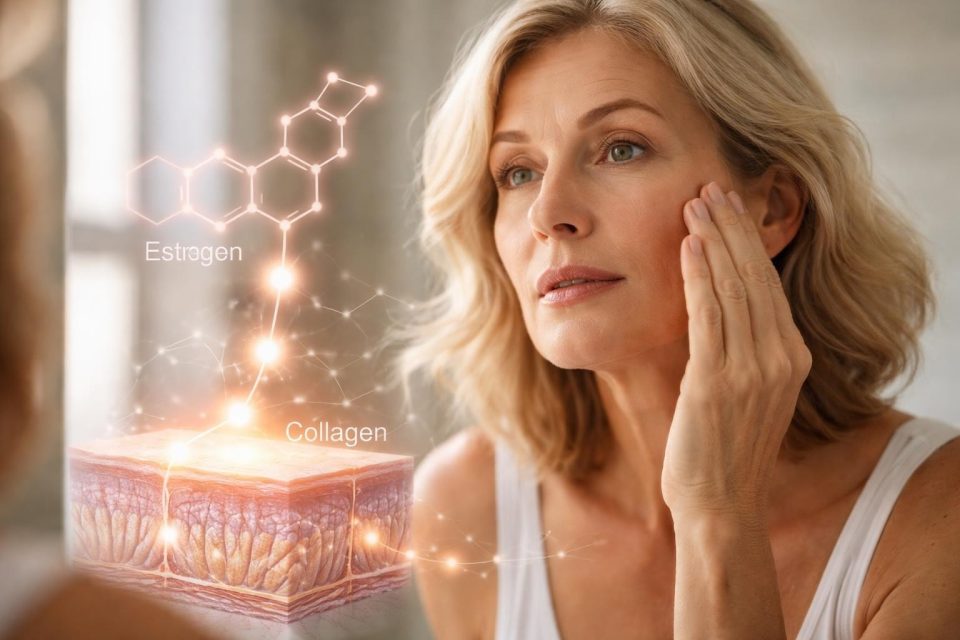
Your skin doesn't lie, especially when menopause arrives. That morning mirror check reveals changes you've never noticed before: deeper lines around your eyes, skin that feels papery thin, and a loss of that youthful bounce. What you're witnessing isn't just normal aging. It's the dramatic impact of menopause and collagen reduction working together to transform your skin's foundation. Understanding this connection empowers you to take action before these changes become more pronounced.
The Science Behind Menopause and Collagen Reduction
Estrogen acts as your skin's invisible architect, orchestrating collagen production throughout your reproductive years. When menopause begins, estrogen levels plummet by as much as 90%, triggering a cascade of changes beneath your skin's surface.
Research shows that women can lose up to 30% of their collagen during the first five years of menopause. This isn't a gradual decline. It's an accelerated loss that happens faster than at any other time in your life.
What Happens to Your Collagen During Menopause
Your body contains several types of collagen, but Type I and Type III are the superstars for skin health. These proteins form the scaffolding that keeps your skin firm, plump, and resilient.
Before menopause, your fibroblasts (collagen-producing cells) work efficiently:
- They manufacture fresh collagen continuously
- They maintain optimal collagen quality
- They repair damaged collagen fibers
- They balance collagen production with breakdown
After menopause begins, this system falters. The impact of collagen loss extends beyond your skin's appearance, affecting everything from joint health to bone density.
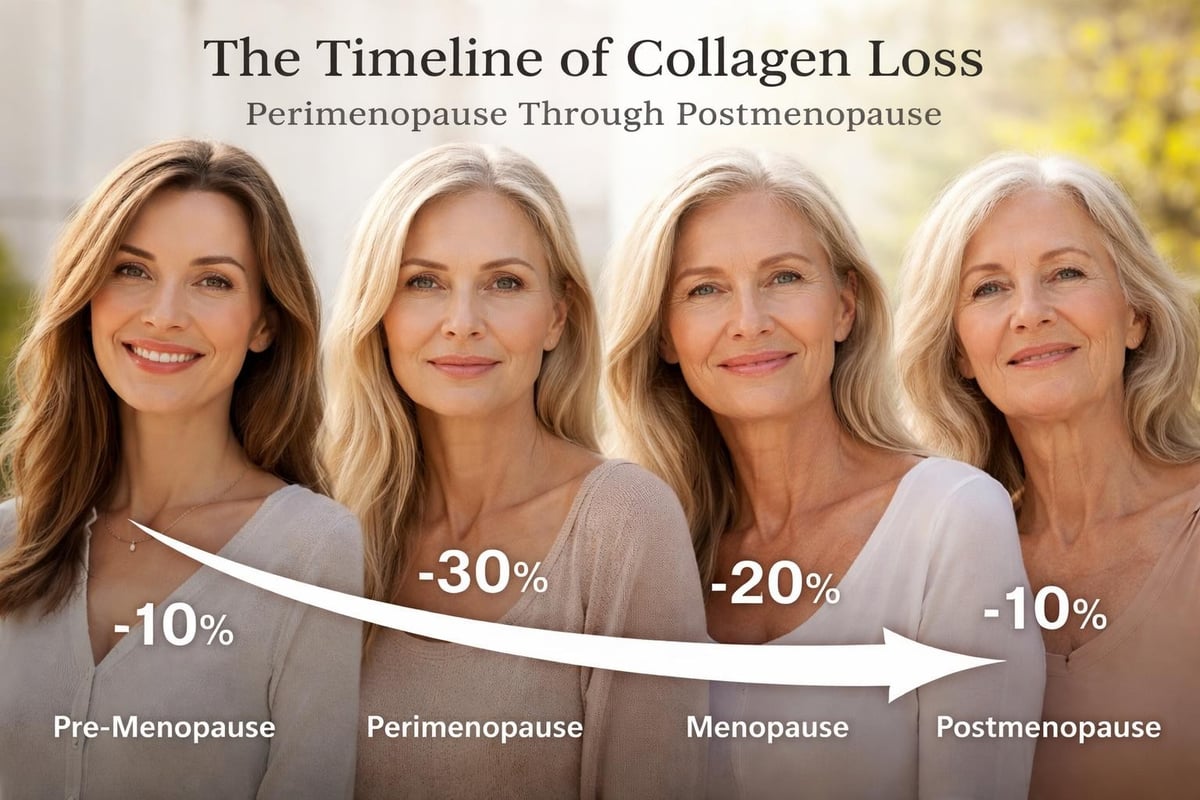
Visible Signs of Menopause-Related Collagen Loss
How do you know if menopause and collagen reduction are affecting your skin? The signs appear in predictable patterns, though every woman experiences them differently.
Immediate Changes (First 1-2 Years)
Your skin begins showing early warning signals:
- Fine lines deepen into wrinkles
- Skin texture becomes rougher
- Pores appear larger
- Under-eye hollows develop
- Skin feels thinner to touch
Progressive Changes (Years 3-5)
The transformation accelerates as collagen continues declining:
- Sagging becomes noticeable along the jawline
- Nasolabial folds deepen significantly
- Skin loses its ability to "bounce back" when pinched
- Dark spots and uneven tone become more prominent
- Dryness intensifies despite moisturizing
| Skin Attribute | Pre-Menopause | Post-Menopause (5 Years) |
|---|---|---|
| Collagen Density | 100% baseline | 70% or less |
| Skin Thickness | Normal | 25% thinner |
| Elasticity | High resilience | Significantly reduced |
| Hydration Retention | Optimal | Compromised |
Just as understanding sensitive skin remedies requires recognizing unique triggers, addressing menopausal skin changes demands targeted strategies.
Why Collagen Depletion Accelerates After Menopause
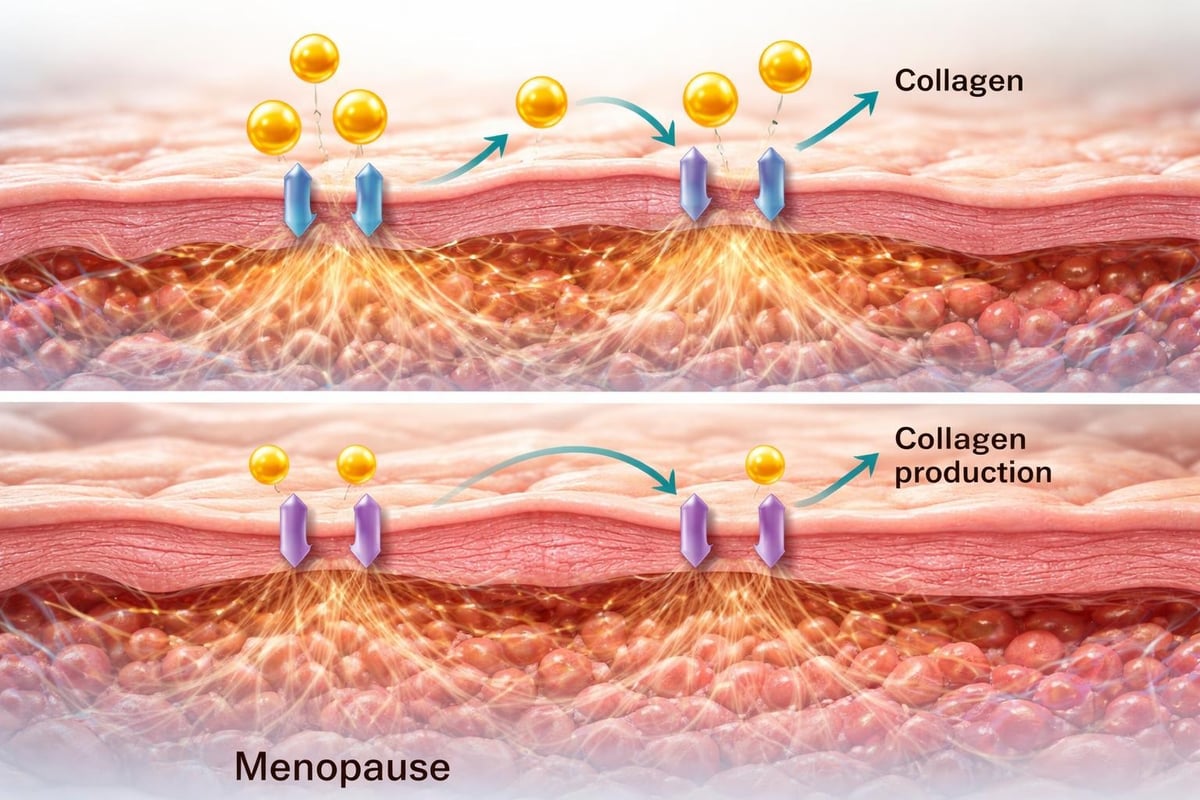
Think of estrogen as the fuel that powers your collagen factory. Without adequate fuel, production grinds to a halt. The relationship between hormones and collagen synthesis is complex and fascinating.
The Estrogen-Collagen Connection
Estrogen receptors exist throughout your skin. When estrogen binds to these receptors, it triggers multiple beneficial processes:
- Stimulates fibroblast activity
- Increases hyaluronic acid production
- Enhances skin hydration
- Improves blood flow to skin tissue
- Protects existing collagen from degradation
When estrogen disappears, these protective mechanisms vanish too. Your skin becomes vulnerable to environmental damage, oxidative stress, and inflammatory processes that further accelerate collagen breakdown.
Research on collagen and menopause reveals that genetic factors also influence how severely you're affected. Some women maintain better collagen levels naturally, while others experience dramatic losses.
Natural Strategies to Combat Collagen Loss
You can't stop menopause, but you absolutely can slow collagen depletion. Evidence-based approaches work best when combined into a comprehensive strategy.
Topical Ingredients That Make a Difference
Not all skincare products deliver results for menopausal skin. Focus on ingredients with proven efficacy:
Retinoids and Retinol
These vitamin A derivatives stimulate collagen production by activating specific genes. They're among the most researched anti-aging ingredients available. Start with lower concentrations if you're new to retinoids, especially if you have sensitive skin.
Vitamin C (L-Ascorbic Acid)
This antioxidant powerhouse does triple duty:
- Directly stimulates collagen synthesis
- Protects existing collagen from free radical damage
- Brightens hyperpigmentation common in menopause
Peptides
These amino acid chains signal your skin to produce more collagen. Copper peptides and matrixyl peptides show particularly promising results.
Growth Factors
Derived from plant or biotech sources, growth factors communicate with your skin cells to ramp up collagen production.
The strategies for effective skincare emphasize consistency over miracle solutions. Results take three to six months of dedicated use.
Lifestyle Modifications That Support Collagen
Your daily habits profoundly impact how well your skin maintains its collagen network.
Nutrition for Collagen Support
- Protein-rich foods provide building blocks for collagen synthesis
- Vitamin C sources (citrus, berries, leafy greens) enable collagen formation
- Bone broth supplies collagen and supportive amino acids
- Omega-3 fatty acids reduce inflammation that damages collagen
- Antioxidant-rich foods protect against oxidative stress
Sun Protection (Non-Negotiable)
UV radiation destroys collagen faster than any other external factor. Daily broad-spectrum SPF 30 or higher prevents further damage and allows your skin to focus on repair rather than defense.
Sleep Quality
Your skin regenerates collagen during deep sleep. Aim for seven to nine hours nightly. Growth hormone peaks during sleep, triggering collagen production and cellular repair.
Advanced Treatments for Collagen Restoration
When topical products and lifestyle changes aren't enough, professional treatments offer more dramatic results for menopause and collagen reduction.
In-Office Procedures
| Treatment | How It Works | Expected Results | Frequency |
|---|---|---|---|
| Microneedling | Creates micro-injuries that trigger collagen production | Improved texture, reduced wrinkles | Every 4-6 weeks (4-6 sessions) |
| Radiofrequency | Heat stimulates deep collagen remodeling | Tightening and firming | Monthly (3-6 treatments) |
| Laser Resurfacing | Removes damaged layers, stimulates new collagen | Significant rejuvenation | Annual or biannual |
| LED Light Therapy | Red light penetrates to stimulate fibroblasts | Gentle improvement over time | Weekly maintenance |
Choose practitioners experienced in treating menopausal skin. Your skin behaves differently now than it did in your 30s or 40s.
Collagen Supplements: Do They Work?
The supplement industry heavily markets collagen powders and pills. What does science say?
The Evidence:
Studies show that hydrolyzed collagen peptides taken orally may improve skin hydration and elasticity. The peptides break down into amino acids that your body can use as raw materials for collagen synthesis.
Realistic Expectations:
Supplements won't reverse severe collagen loss, but they might provide modest improvements when combined with topical treatments and healthy lifestyle habits. Look for supplements containing Types I and III collagen, ideally with added vitamin C.

Hormonal Approaches to Collagen Preservation
Addressing the root cause of menopause and collagen reduction means considering hormone replacement therapy (HRT) and related options.
Hormone Replacement Therapy and Skin
HRT restores estrogen levels, which can significantly benefit collagen and skin elasticity. Women on HRT often maintain better skin thickness and collagen density compared to those not receiving hormone therapy.
Benefits for Skin:
- Preserved collagen production
- Maintained skin thickness
- Improved hydration
- Better wound healing
- Reduced wrinkle formation
Important Considerations:
HRT isn't right for everyone. Discuss your personal health history with your healthcare provider. Factors like breast cancer risk, cardiovascular health, and family history influence whether HRT is appropriate.
Phytoestrogens and Natural Alternatives
Plant-based compounds mimic estrogen's effects, though less potently. Soy isoflavones, red clover, and flaxseed contain phytoestrogens that may offer mild benefits.
Topical phytoestrogen creams show promise in research, potentially stimulating collagen production without systemic hormonal effects. Look for products containing genistein or equol.
Creating Your Personalized Collagen-Boosting Routine
Managing menopause and collagen reduction requires a multi-faceted approach tailored to your unique needs.
Morning Routine Framework:
- Gentle cleanser appropriate for thinning skin
- Vitamin C serum for antioxidant protection
- Peptide or growth factor treatment
- Hydrating moisturizer with ceramides
- Broad-spectrum SPF (never skip this step)
Consider incorporating face serums designed for sensitive skin if your skin becomes more reactive during menopause.
Evening Routine Framework:
- Oil-based cleanser to remove sunscreen and impurities
- Water-based second cleanse
- Retinol or retinoid (start 2-3 times weekly)
- Hydrating essence or toner
- Richer night cream with collagen-supporting ingredients
Weekly Additions:
Gentle exfoliation removes dead skin cells that prevent product penetration. Choose enzymatic or lactic acid exfoliants rather than harsh scrubs that damage delicate menopausal skin.
The Role of Stress Management in Collagen Health
Chronic stress elevates cortisol, which directly breaks down collagen. The mind-skin connection becomes even more critical during menopause.
Stress-Reduction Techniques That Help:
- Mindfulness meditation lowers cortisol levels
- Yoga combines stress relief with gentle exercise
- Regular exercise improves circulation to skin
- Social connection buffers against stress hormones
- Creative pursuits activate relaxation responses
Women who manage stress effectively often show less severe signs of menopause and collagen reduction compared to those experiencing chronic stress.
Adapting Your Approach as Menopause Progresses
Perimenopause, menopause, and postmenopause each require slightly different strategies. Your skin's needs evolve as hormone levels stabilize at lower levels.
Perimenopause (Transition Period):
Hormones fluctuate wildly. Your skin might behave unpredictably, breaking out one week and feeling dry the next. Maintain consistency while allowing flexibility for changing conditions.
Early Menopause (Years 1-3):
Collagen loss accelerates most dramatically now. This is the critical window for implementing intensive treatment to minimize long-term damage.
Postmenopause (Years 5+):
Hormone levels stabilize at lower levels. Focus shifts to maintenance and protection. Continue proven strategies while monitoring for new changes.
Realistic Expectations and Long-Term Success
Understanding what's achievable prevents frustration and helps you celebrate real progress. You can't restore your 25-year-old skin, but you absolutely can maintain healthy, resilient skin throughout menopause and beyond.
What's Possible:
- Slowing the rate of collagen loss significantly
- Improving skin texture and reducing fine lines
- Maintaining firmness and minimizing sagging
- Achieving a healthy, radiant complexion
- Building resilience against environmental damage
What Requires Acceptance:
Some changes are inevitable. Skin will thin somewhat. Wrinkles will form. The goal isn't to fight nature but to age with vitality and grace.
Practical approaches to boost firmness work best when paired with self-compassion and realistic timelines.
Building Your Support System
Managing menopause and collagen reduction becomes easier with professional guidance and community support.
Healthcare Team:
Assemble professionals who understand menopausal skin:
- Dermatologist experienced in mature skin
- Aesthetician specializing in menopausal treatments
- Primary care physician or gynecologist for hormone management
- Nutritionist for dietary optimization
Community Resources:
Connect with other women navigating similar experiences. Online forums, local support groups, and educational resources help you feel less isolated while learning from others' successes and challenges.
The journey through menopause affects every aspect of your wellbeing, not just your skin. Using face cream formulated for delicate skin becomes part of a larger self-care practice honoring this life transition.
Menopause and collagen reduction present real challenges, but armed with knowledge and effective strategies, you can maintain vibrant, healthy skin throughout this transition. By combining evidence-based skincare, lifestyle modifications, and professional treatments when needed, you're investing in your skin's long-term health and your overall confidence. At Sinusoothe Ltd, we understand the unique needs of menopausal skin and offer natural skincare solutions formulated to support your skin through every stage of life. Explore our range today and discover how gentle, effective ingredients can help you maintain the radiant complexion you deserve.